
Road Deaths Are Not Just Tragedies - They Are Predictable Failures
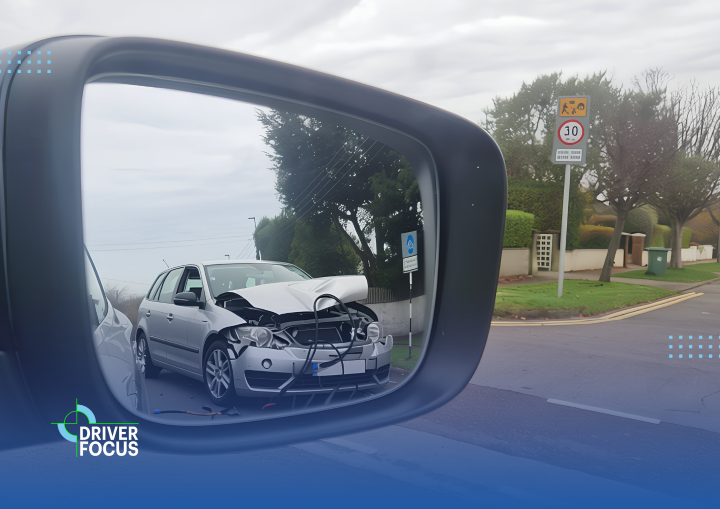
Below is our “Letter to the Editor of The Irish Times”, in response to that newspaper’s “Leadership needed on road safety” IT Sunday editorial (21/12/25) and “PR campaigns are not enough to stop people dying on our roads. Here is what we need to do” - a thoughtful opinion piece (3/12/25) by Sinéad O’Sullivan, a business economist, formerly at Harvard Business School, where she served as head of strategy of the HBS Institute for Strategy.
[4 January 2026 update - at least 190 people lost their lives on Irish Roads in 2025, according to provisional Garda statistics.]
Sir,
Your “Sunday Read” today December 21st (“Around Christmas dinner tables this week there will be at least 182 empty seats”) strikes a sombre and necessary tone. Behind every road death is a human story and a community left reeling. But if we are serious about change, we must say what many still shy away from: these deaths are not just tragedies - they are predictable, preventable failures.
This year’s rising toll is not an outlier. It is part of a clear and worsening trend. Over the 20-year lifespan of the Road Safety Authority (2006–2024), annual fatalities fell by 52% - from 365 to 175. But since 2018, that trend has reversed, with deaths rising more than 30%. Meanwhile, the number of road crashes reported to Gardaí has surged by 107% to nearly 4,000 a month. [1]
These are not small fluctuations. As any safety professional will confirm (maybe citing Heinrich’s Pyramid or the Safe Systems approach) a rise in minor crashes signals a broader failure to manage risk. And yet, we continue to overlook a critical contributor: the role of employers in managing road risk.
As the RSA, HSA and Garda Síochána jointly stated in their July 2025 Driving for Work guidance: “a vehicle used for work purposes is considered a place of work under health and safety legislation [2] and employers must put control measures in place and monitor their effectiveness to prevent harm from work-related road risk.” [3]
Fatigue, distraction, speeding, poorly maintained vehicles, expired licences - all are common in workplaces that don’t monitor or manage driving for work and treat road crashes as "just bad luck" rather than failures of systems, culture and leadership. This mindset is reinforced by weak enforcement, low conviction rates and the absence of clear accountability. It is exactly as your column says: “Ireland does not treat road deaths as structural failures… That framing protects institutions, not people.”
The RSA guidance could not be clearer and it attempts to tackle the 29% of fatalities known to involve driving for work, according to this month’s European Transport safety Council (ETSC) report [4]:
Since 2007, I see both sides every day: the employer who waits until a serious crash occurs before reviewing their responsibilities and the forward-thinking organisation that takes action because they don’t want to be “that company” in tomorrow’s headlines.
I believe 2026 must mark a turning point. That means:
· Holding employers to account where they fail to manage known risks
· Supporting insurers and brokers who push for stronger controls
· Updating enforcement strategies to match today’s risk landscape
· Embracing the principle - as the RSA puts it - that “no one should die or be seriously injured in the course of work-related driving.” [5]
· And crucially, calling out the fact that “political accountability is non-existent.” [6]
The status quo benefits few and protects no one. It simply prolongs the harm.
Yours sincerely,
Ron McNamara | CEO, DriverFocus
Cited Sources:
1. RSA Collision Statistics - https://www.rsa.ie/road-safety/statistics/road-traffic-collision-data
2. Driving for Work: Risk Management Guidance for Employers, RSA/HSA/AGS, July 2025, p.5
3. Ibid., p.6
4. European Transport Safety Council (9/12/2025) - https://etsc.eu/tapping-the-potential-for-reducing-work-related-road-deaths-and-injuries-pin-flash-49/
5. Driving for Work: Risk Management Guidance for Employers, RSA/HSA/AGS, July 2025, p.5 – “Vision Zero” principle
6. The Irish Times - https://www.irishtimes.com/opinion/2025/12/03/sinead-osullivan-pr-safety-campaigns-ireland-road-deaths-what-we-must-do/?