
StopRoadDeaths.ie and Workplace Risk
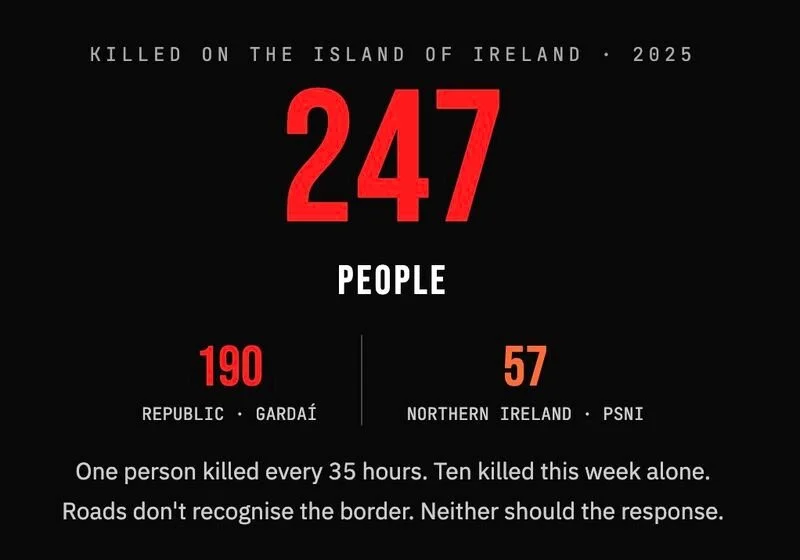
The launch of StopRoadDeaths.ie is both powerful and necessary.
It gives visibility to a stark reality: road deaths in Ireland have risen sharply, reversing years of progress. Families are grieving, communities are shaken and public confidence in road safety leadership is under strain.
The #NOTASTATISTIC campaign challenges citizens to contact their local TDs and demand action. That is very welcome.
But there is one dimension that risks being overlooked in the wider debate: Driving for work.
When Driving Is Work, Road Risk Is Workplace Risk
The European Transport Safety Council estimates that approximately 29% of road fatalities in Ireland are work-related. In Ireland, this translates into an estimated 40 deaths and serious injuries each month involving people who are driving as part of their employment - or interacting with those who are.
These are not simply “traffic incidents.” They are occupational exposure events.
Under Irish law, employers have a duty to manage workplace risks. The Health and Safety Authority makes it clear: if driving is part of work, it falls within the scope of the Safety, Health and Welfare at Work Act.
Yet in many organisations, driving for work remains poorly governed.
Risk registers prioritise slips, trips, manual handling and machinery - while the single activity most likely to kill a worker or a bystander is treated as administrative.
That must change.
The Governance Gap
Across Ireland, at least one million employees drive:
Company cars
Vans and light commercial vehicles
Grey fleet vehicles (their own cars used for work)
In many cases, employers do not:
Regularly verify licence validity
Assess driver risk exposure
Provide targeted training based on risk profile
Evidence supervision and intervention
This creates a governance blind spot.
When a collision occurs, investigators do not simply examine driver behaviour. They examine systems:
What policy was in place?
What supervision occurred?
What data was available?
What interventions were triggered?
The Road Safety Authority and An Garda Síochána publish guidance, enforcement and collision data annually.
The trends are clear. But the corporate response is inconsistent.
The question for boards and senior leaders is no longer “Is this a transport issue?” It is:
“Have we treated driving for work as the critical safety risk it actually is?”
StopRoadDeaths.ie and the Missing Stakeholder
StopRoadDeaths.ie rightly calls for political accountability. Infrastructure, enforcement, education and policy all matter.
But employers are also stakeholders in this system.
If nearly a third of fatalities are work-related, then corporate Ireland must examine its own contribution - directly or indirectly.
That means:
Elevating Driving for Work to a board-level risk discussion
Integrating road risk into formal health and safety management systems
Ensuring data integrity around driver licences, insurance and exposure
Demonstrating instruction, information, training and supervision in practice — not just in policy
Three Questions Every Board Should Now Ask
Do we know exactly how many staff drive for work - including grey fleet?
Can we evidence that we have assessed and managed their risk?
If a fatal collision occurred tomorrow, could we demonstrate proactive supervision?
If the answer to any of these is uncertain, the organisation is exposed - legally, financially and reputationally.
And Three Measures Government Must Take
DriverFocus fully supports the StopRoadDeaths.ie campaign and in alignment with its goals, calls for:
1. Official recognition by the Health and Safety Authority that an estimated 40 people are killed or seriously injured (KSI) every month as a result of someone driving at work
2. An urgent update of the 2012 Road Safety Authority research that showed most employers with fleets had no driving policy, risk assessments and didn't check driver licences, despite all being legally required and
3. Clear sanctions and reporting for governance failures, where employers fail to take reasonable and practicable steps to manage workplace road risk, especially where it is the leading cause of "accidents."
And Finally, A Call to the Health & Safety Profession
Health and safety leaders have a critical role. Road risk must move from the margins of compliance to the centre of enterprise risk management. Driving for work is not a fringe issue - it is frequently the most significant uncontrolled hazard in an organisation.
The debate sparked by StopRoadDeaths.ie provides a timely catalyst.
Public awareness is rising and political scrutiny is increasing. Available data is worrisome.
The opportunity now is for employers to step forward - not defensively, but responsibly. Because when driving is part of work, preventing road deaths is not just a matter of public policy, it is a matter of corporate governance. And governance demands evidence, accountability and action.
Sources:
StopRoadDeaths.ie - [Update - 09-03-2026 - The Irish Times Opinion Section - “When will we declare Ireland’s road-death toll the public health crisis it is?]
ETSC - European Transport Safety Council (9/12/2025) - https://etsc.eu/tapping-the-potential-for-reducing-work-related-road-deaths-and-injuries-pin-flash-49/
Driving for Work: Risk Management Guidance for Employers, RSA/HSA/AGS, July 2025